Divinum Combat Combo Guide
Launch, juggle, dash, and spend Fury without turning block into a trap.
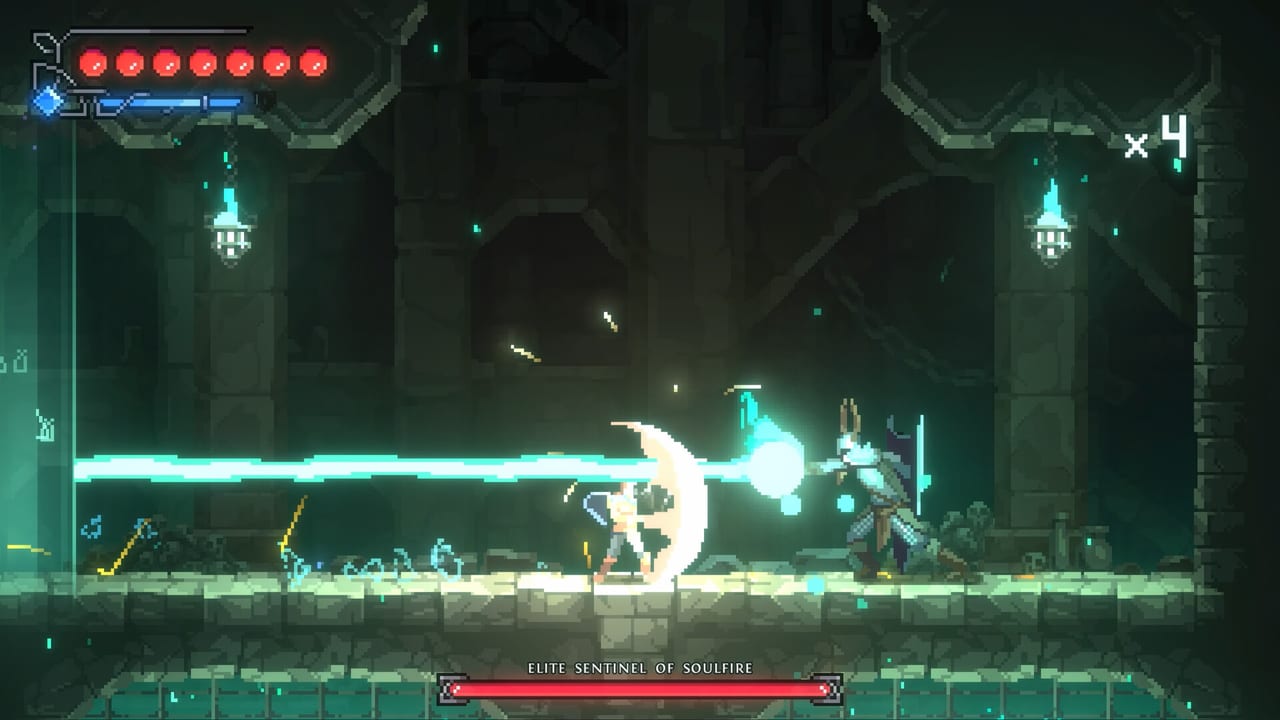
Combat is why people stay in Divinum. Exploration is pleasant, the pixel art is moody, but the fight system is the part launch reviews call fluid, musical, and “play with intent.” This page is the mechanical how-to. For loadouts that feed these strings, use rune builds and skills and Fury. For buttons, use controls.
The design pitch is honest: it is not a one-button Metroidvania. Fjør has two primary weapons, air extras that only appear after a launch, multi-direction dashes, a block that costs mana, and a Fury meter that wants variety. If your combo counter resets every four hits, you are not playing the game Sigil Games shipped.
The juggle is the centre
Most fodder and many elites can be launched. In the air they cannot act or escape, and Fjør unlocks extra moves that do not exist on the ground. That is the spectacle-fighter half of the hybrid.
A reliable ground-to-air path:
- Confirm a hit so the enemy is staggered or close to stun. Some heavy bodies, like large slimes in the demo slice, need a stun before they will juggle cleanly.
- Uppercut. Hold up plus attack to lift. Quick-tap the same input for the alternate uppercut that stays grounded — useful when a ceiling is low or you want to keep a pack stacked on the floor.
- Chase with a directional dash. Divinum dashes are not only invuln; they are positioning.
- Spend air attacks until the body is about to drop, then either spike, re-lift, or disengage before a punishable landing.
If the counter in the corner is climbing through the teens and twenties, you are in the intended loop. The embedded video mid-article is a short combo showcase; watch the launches, not just the particle spray.
Two weapons, one string
Fjør is built around two distinct primary weapons. The HUD shows the active arm under the mana bar. Swap inside a combo when a weapon’s ground string is better at building stun and the other is better at air damage or projectile coverage. Do not park the second weapon in the menu forever. The weapon guide covers roles; this page only cares that a swap is a combo tool, not a fashion choice.
Launch-week trailer footage also teases an additional weapon type. Treat anything new as another stance: learn its first three hits before you take it into a cleansing trial.
Block, perfect block, and the mana trap
A normal block has a reasonably wide window after the 0.39 demo changes. It is still not a shield you hold through a raid boss. Perfect block is the high-skill version: time it just as the hit lands, take no damage, and shove the enemy closer to stun. It costs mana. If you press early you still lose a pip of life and still pay mana. If a block resolves and your mana bar is empty, Fjør eats a strong stun. That rule is easy to forget in a panic, and it is how stylish players suddenly eat a full string.
Practical rules:
- Perfect block to create a launch window, not to live forever.
- Keep a mana reserve if the next telegraph is a grab or a beam you cannot dash.
- Pair block-heavy play with mana shards and Runes that refund resources. See the rune tier list.
- When mana is dry, dodge. Dash is the free answer; block is the taxed answer.
Projectiles, debris, and “no contact damage”
Idle enemy bodies do not damage you. Only telegraphed attacks count. That means you can stand inside a crowd to finish a juggle — until the animation that actually hits begins.
Two extra toys show up in real rooms:
- Projectile deflection. Batting shots back is a launch-week tip from players who already found it more useful than another light attack.
- Environmental debris. Falling chunks can be knocked into enemies. If a ceiling is crumbling, look at it as ammo.
These tricks matter more in catacombs and boss halls, including fights like the Elite Sentinel of Soulfire where beams eat greedy rolls. Route those rooms with map exploration so you know which arenas even allow a long juggle.
Fury wants variety
Fury builds when you strike, spend offensive skills, and land perfect blocks. Higher combo counts and mixed actions fill it faster. When the meter is full, Fjør enters a short Fury surge — a window to dump damage, not a time to go AFK on one button. If your build never fills Fury, you are repeating the same two hits. The skills page lists how to spend the surge; this page is the reminder that Fury is a combo resource.
Training plan for the first two hours
- Ten minutes on fodder: only launches, no skills.
- Ten minutes: add perfect blocks, watch mana.
- Ten minutes: swap weapons mid-string.
- Then a low-tier trial. If you die to empty-mana stun, you learned the real lesson.
- Only then spend Sanctite in the shop.
Hand cramps are a real launch complaint. If rapid inputs hurt, drop to a pad, lower difficulty of optional rooms, and take breaks. Stylish combat is not a medical plan.
Common combo deaths
- Mashing light attack until the counter dies.
- Uppercutting under a low ceiling and eating the landing.
- Blocking the last point of mana “just in case.”
- Ignoring the second weapon because the first sprite looks cooler.
- Treating every elite like a Hollow Knight bounce instead of a stun-then-juggle target.
When a room still walls you after this list, the problem is probably the loadout or the trial tier, not your soul. Change Runes, read bosses, and check launch notes if a collision bug stole a dodge.
Frequently Asked Questions
Quick answers to the most common questions.
How do I launch enemies in Divinum?
Stun or stagger first if the body is heavy, then hold up plus attack for the lifting uppercut. Chase with air attacks. Details are in this guide and the getting started habits list.
Why did I get stunned after blocking?
If a block resolves while your mana is empty, Fjør takes a strong stun. Keep a reserve or dash instead. See also skills and Fury for mana-positive kits.
Do I have to use both weapons?
You can ignore the swap, but the kit is designed around two primaries. The weapon guide explains when to swap inside a string.