Divinum Map and Exploration Guide
Surface forests, catacombs, ruins, and the pickups that actually raise your HP.
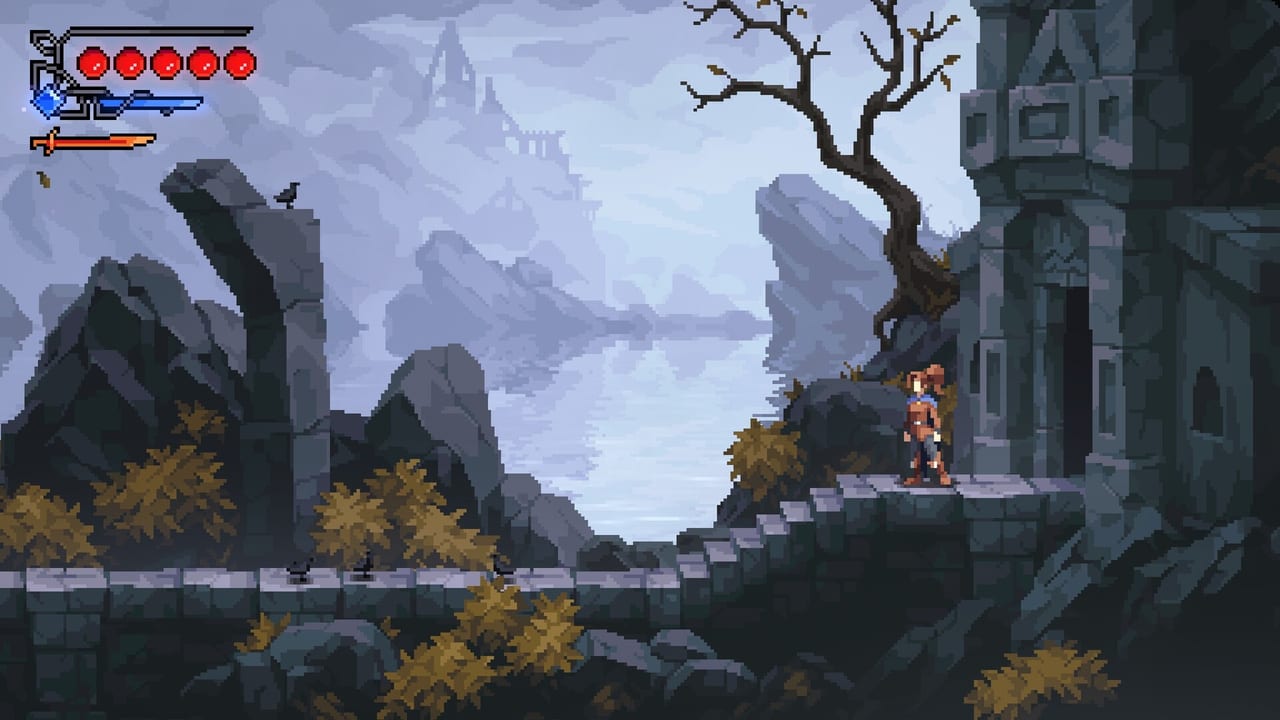
Divinum’s island is small compared with a 40-hour Metroidvania, and that is a feature. Sigil Games spent a decade turning test rooms into a readable north: lakes, towers, candlelit halls, crystal caves, and gated trials. The combat fantasy only works if you keep finding life shards, mana shards, Sanctite, and Runes. This page is how to look at the map like a Warden instead of a tourist.
Open it beside getting started on a first save, and beside bosses when a ritual is clearly over-tuned for your current HP.
The map button is not optional
Late demo notes added a dedicated map input. Default is Tab on keyboard and Select on a controller. Bind it somewhere you can hit without dropping a dash. The island is vertical as well as horizontal: forgotten caves and forests on the surface, catacombs and sacred ruins below. If you only run right, you will credit-skip the game and then wonder why reviews mention secrets.
Look up and look down exist for a reason. Hold the down direction (S on a typical WASD layout) to peek below a platform; use the up direction to scout ceilings. Several demo rooms hide ledges that are only obvious when you tilt the camera. Full binds sit on controls.
What you are actually collecting
Sanctite. The sparkly pickup. A magnet effect was added so it is less tedious to vacuum after a fight. Spend it in the shop. The shop UI can show more items at once than it did in early playtests, which is a polite way of saying you should scroll.
Life shards. Extra red orbs on the HUD. These are your real difficulty slider. Optional rituals become fair when you are not two-shot.
Mana shards. Extra room on the blue bar. Perfect blocks and skills both drink this bar. If you play a block-heavy style, mana shards are not optional cosmetics.
The rune menu lists how many life and mana shards you have already banked. If the numbers are low and a boss is cooking you, the answer is this page, not a new YouTube mashup.
Runes and skills. Official copy: explore, find secrets, and beat bosses to earn equipment that changes fights. There are on the order of two dozen passive Runes and about a dozen mana skills in the design the developer described during production. You will not get them all on the main road. Park theory on rune builds and skills and Fury.
Biomes and how they fight
- Surface ruins and lakes. Wide sightlines, wind, stairs, and birds. Good for learning dashes without a low ceiling. Screenshot language matches Fjør standing above a misty lake with a tower in the fog — that is the “overview” of the island, not a combat exam.
- Forests. Mix of platforming and ambush. Watch for debris you can knock into enemies, a trick launch-week players already swear by.
- Crystal caves. Vertical rooms, pretty purple geometry, easy to miss a shard on a back ledge. The playtest walkthrough mid-page spends a long time in spaces like these.
- Catacombs. Lanterns, beams, soulfire elites. Bring projectile answers. The Elite Sentinel of Soulfire lives in this fantasy even if your seed meets a different named bar first.
- Sacred ruins and halls. Story weight, ancestral flavour, and often a shop or a trial gate nearby.
You do not need a 200-room spreadsheet. You need a habit: whenever you gain a movement option, retrace two screens, not twenty.
Sequence breaking
Steam lists a hidden Sequence Breaker achievement among the forty-five. Skips exist on this compact island. That is not permission to skip the first three Life Orb shards. If you clip into a high-tier cleansing ritual with starter HP, the room is doing its job. Hunt trophies on achievements; count pickups on collectibles.
A launch collision bug can look like a skip: climb a ledge and jump together, and Fjør may glitch through walls with infinite jumps until you menu-quit. That is a bug, not a speedrun tech you should practise. Details and the workaround live in launch notes.
Routing for a first clear
- Prologue and HUD literacy from getting started.
- Grab every shard you can see without a new movement toy.
- Learn launches in the first combat rooms using combat combos.
- Spend Sanctite on shop tools that change a fight.
- Attempt a low-tier trial. If it deletes you, explore one more biome instead of repeating the same death.
- Only then push story bosses.
This loop is why some Steam reviews call the game a balance between relaxing clears and edge-of-seat fights. You are supposed to leave, upgrade, and return. That is the Metroidvania half of the hybrid.
Quality-of-life that arrived before launch
Demo 0.39.1 and earlier notes added: a dedicated map button, combo counter, magnet Sanctite, rune menu shard counts, a roomier shop, a wider normal block window (with the empty-mana stun penalty), and an alternate grounded uppercut. If a year-old video tells you the map is a pain, it is probably outdated. Prefer this wiki plus updates.
When you are lost, open the map, peek up, peek down, and ask whether the room is a secret, a shop, or a trial. Those three answers cover almost every locked door on the island.
Frequently Asked Questions
Quick answers to the most common questions.
What is the map button in Divinum?
Tab on keyboard and Select on a controller by default. Rebind it in controls if that is awkward.
Where do I find life shards?
Off the main path in caves, ruins, and optional rooms. The rune menu shows how many you have. Routing is the point of this map guide.
Should I sequence-break on a first playthrough?
Only if you enjoy it. There is a hidden Sequence Breaker achievement, but high-tier trials will punish a starter kit. Do not treat launch collision bugs as trophy tech.