Divinum Prologue Walkthrough
First areas, first lessons, and the route to the Slumbering Depths.
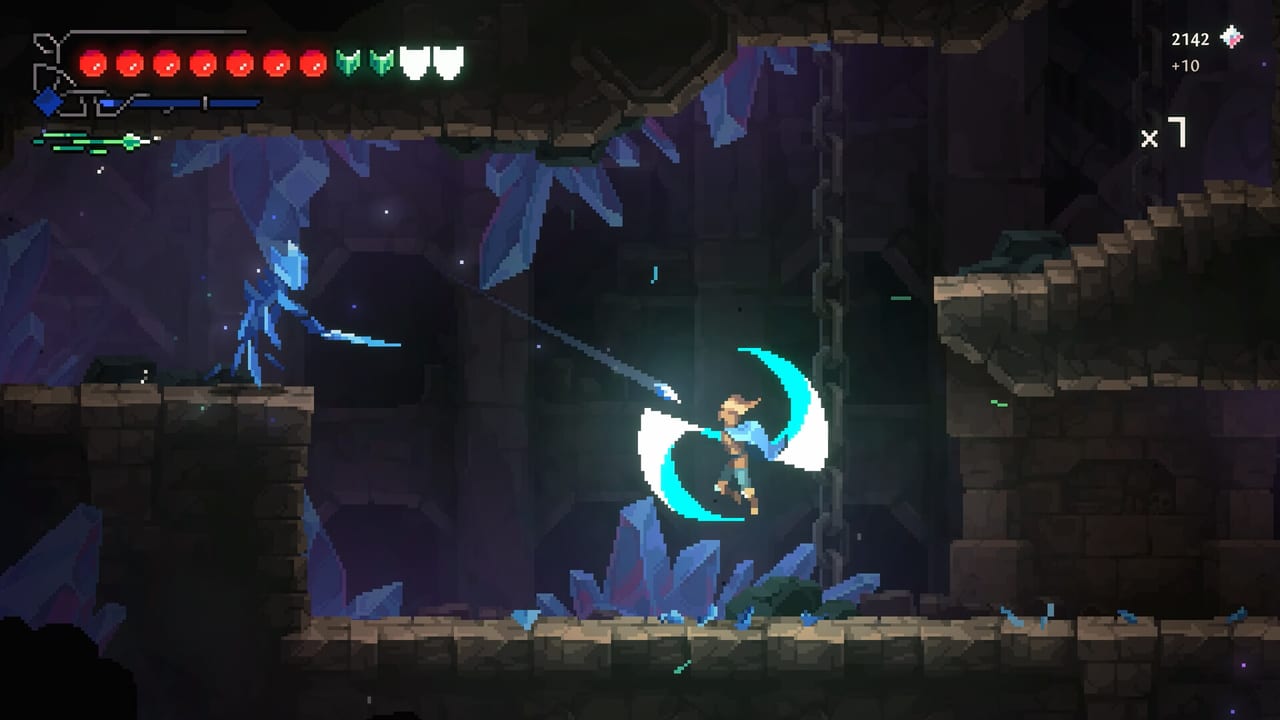
The Divinum prologue is the first area of the game and serves as an extended tutorial disguised as a story beat. You control Fjør on the surface of the northern island as she first confronts the reality of the invasion. This page covers the full prologue route: every area transition, every pickup worth noting, the first boss encounter, and the moment you descend into the Slumbering Depths.
This walkthrough is based on the full demo playthrough and the Into Indie Games prologue guide. The full game adds the rest of the island, more biomes, and additional story beats between the prologue and the depths. What ships in the demo is a reliable proxy for the first two to three hours of the campaign.
Starting the game
After the opening cinematic, Fjør is standing near her village. The first thing the game teaches you is movement: walk, run, and jump. These are the basics that every other skill in the game builds on.
Do not rush. The prologue is designed to be forgiving while it teaches you the fundamentals. Spend the first few minutes just moving through the space and getting a feel for the camera and the rhythm of side-scrolling movement.
The HUD appears at this point: life orbs in red, mana in blue, Fury meter in cyan or green, and the combo counter top-right. The game will not throw you into combat immediately — it lets you breathe.
First combat introduction
Your first enemy encounter comes shortly after the village area. The game introduces combat in a controlled environment: a single enemy type, a clear arena, and enough space to experiment.
The key lesson here is not damage output — it is timing. Fjør’s combat system rewards patience and observation over button-mashing. Watch for the telegraph on enemy attacks. Idle contact does not hurt you. Only a swing that starts will connect.
Use this room to practise:
- Light attack strings — tap attack repeatedly to build a basic ground combo
- Uppercut (launch) — hold up plus attack to lift enemies into the air
- Alternate uppercut — quick-tap the same input to stay grounded; useful in low ceilings
- Dash — press the dash input in any direction to dodge out of the way
- Block — hold block to reduce incoming damage; perfect block (timed just as a hit lands) shoves the enemy toward stun at a mana cost
Do not worry about optimal combos in the prologue. Worry about getting each individual tool into your muscle memory.
The goblin trader
Partway through the prologue, you encounter a goblin trader. This is more than a narrative beat — it establishes that the island has commerce, that resources have value, and that Sanctite pickups are meant to be spent rather than hoarded.
The trader does not block your progress. You can buy something and continue, or skip and return later. The demo version of this area introduced the ledge-clip bug (climb a ledge and jump at the same moment, and Fjør may glitch through walls with infinite jumps until you quit to the menu). If you encounter that, menu-quit and resume.
Surface route and first secrets
The prologue area includes surface-level environments: forest paths, ruins, and open-air platforms with views of the island. This is also where the game first rewards looking up and looking down.
- Look up (W on keyboard) — scouts ceilings for hidden ledges or items
- Look down (S on keyboard) — peeks below platforms for secret drops or alternate paths
Life shards and mana shards can appear off the main path even in the prologue. The rune menu (opened separately from the map) shows your current shard counts. If those numbers are low and a trial is coming, consider exploring more before pushing forward.
The Sanctite pickups in the prologue are relatively sparse compared to later areas. Do not obsess over maximising every coin — the real tutorial for Sanctite spending comes in the first real shop visit.
Descent to the Slumbering Depths
The prologue ends with Fjør descending into the Slumbering Depths — the first major underground area of the game. This is a significant tonal shift: the outdoor forest environment gives way to lantern-lit corridors, stone passages, and the first real challenge rooms.
The transition is also where the game stops holding your hand. The enemies in the Depths are more varied, the room geometry is more complex, and the optional challenge arenas (cleansing rituals) become more tempting.
When you reach this transition point, the Slumbering Depths walkthrough takes over.
What to take from the prologue
By the end of the prologue you should have:
- Basic movement and combat in muscle memory
- At least one launch or juggle attempt on a live enemy
- An understanding of the HUD: life, mana, Fury, combo counter
- First encounter with the map system (Tab on keyboard, Select on controller)
- A sense of whether your chosen control scheme (keyboard or controller) feels right
If any of those pieces feel shaky, re-play the prologue rather than pushing into the Depths under-equipped. The game rewards preparation over persistence.
Prologue difficulty and pacing
The prologue is not hard — it is a tutorial. The difficulty in Divinum comes from optional challenge rooms and later boss encounters. If the prologue feels too easy, that is by design. Sigil Games is teaching you the tools before showing you the jobs those tools were made for.
The real test arrives in the Slumbering Depths, where enemy variety increases, room puzzles tighten, and the first real cleansing rituals appear.
Related pages
- Slumbering Depths walkthrough — the area that follows the prologue
- Getting started — HUD breakdown and first-hour habits
- Combat combos — launch windows, uppercuts, and the juggle system
- Collectibles and Sanctite — shard routing and the rune menu
Frequently Asked Questions
Quick answers to the most common questions.
How long is the Divinum prologue?
The prologue runs approximately 30 to 45 minutes depending on exploration. It covers basic movement, first combat, the goblin trader, and the descent into the Slumbering Depths.
What should I collect in the prologue?
Life shards and mana shards off the main path. Sanctite is less dense in the prologue than in later areas. The real lesson is the pickup habit, not maximising every coin.
When does the real difficulty start in Divinum?
After the prologue, in the Slumbering Depths and beyond. Optional cleansing rituals are where the game stops being easy. The main story is challenging but fair; high-tier trials are where players get humbled.